About me

I study how experience teaches people to ignore distractions. Using eye tracking, I ask how we learn to keep our eyes off attention-grabbing distractors, and how quickly we look away when we do land on them.

I am a master's student in the SLAP Lab (Suppression, Learning, Attention, and Perception) at Wake Forest University, advised by Dr. Brad T. Stilwell. Before graduate school, I spent nearly three years coordinating clinical vision and brain research on schizophrenia at the University of Rochester Medical Center. I am applying to PhD programs in psychology for Fall 2027.

Here is a PDF of my CV, if you would like the full details:

Featured award

Second place, Sigma Xi Student Research Showcase 2026

I placed second in the Graduate Student Division of this online science-communication competition, where students present their research to a general audience. My presentation, Skill-Based Learned Oculomotor Avoidance, explains how the brain learns to ignore distractions.

Interests

  • Visual attention
  • Learned distractor suppression
  • Eye movements
  • Individual differences

Education

  • MS in Psychology, expected May 2027 Wake Forest University
  • BA in Psychology and Brain and Cognitive Sciences University of Rochester. High Distinction.

Recent updates

  • Nov 2026 UpcomingOral presentation at the OPAM conference, and a poster at the Psychonomic Society Annual Meeting, both in San Diego.
  • Sept 2026 Received a Professional Development Award from OPAM (view spotlight).
  • May 2026 Presented my first-year master's project at the 2026 Vision Sciences Society Annual Meeting.
  • Apr 2026 Won second place in the Graduate Student Division of the Sigma Xi Student Research Showcase (view my presentation).
  • Mar 2026 Presented my first-year master's project at the North Carolina Conference on Cognition.
A dense black-and-white crowd of people in hats, all facing away from the camera, except one woman in a bright red coat and hat who stands out immediately.

What caught your eye first?

Probably the person in red, before you even meant to look, right?

That instant, involuntary pull toward a salient color is exactly what I study:

How our attention gets captured by something irrelevant to the task, and how experience teaches our eyes to resist it.

Current projects

Thumbnail of the research poster titled Skill-Based Learned Oculomotor Avoidance. A full text description is in the summary below.

Tsion A. Eshetu and Brad T. Stilwell. Poster at the Vision Sciences Society, May 2026. Manuscript in preparation.

Skill-based learned oculomotor avoidance

Bright distractors grab our attention, but experience can teach us to suppress them. Using eye tracking, we tested whether people learn to avoid looking at a distractor, to look away faster once they land on it, or both. They did both, and it looks like a learned skill.

Read the full summary
Example search display Eight items arranged in a ring around a small cross. One is a green diamond, labeled target. One is a red circle, labeled distractor. The other six are green circles. Each item has a short line inside it. target distractor
A search display like the ones in my experiments. The target is the diamond. The red circle is the distractor.

Where did your eyes go first? Find the diamond. Chances are your eyes were pulled toward the red circle before you found it, even though it is not what you were looking for. That pull is what I study.

The question

Salient distractors, like a bright warning light on a dashboard, pull attention away from what we are doing. Experience can teach people to suppress them. But what changes with experience? Do people learn to avoid looking at the distractor in the first place, learn to look away faster once they land on it, or both?

What we did

Participants searched for a target shape while a task-irrelevant, brightly colored distractor appeared. One distractor color showed up much more often than the others. we recorded their eye movements with an EyeLink 1000 Plus eye tracker, which let us separate where the eyes land first from how long they stay there.

What we found

  • Distractors slowed people down less when they were the frequent color. The slowdown was 124 ms for the frequent color and 157 ms for the rare colors.
  • People got better at avoiding the distractor. Over the session, their first look landed on the distractor less often (a 19.6% decrease from the first block to the last), and less often still for the frequent color.
  • People got faster at letting go. When they did look at the distractor, they spent 53 ms less time on it by the end of the session.

Why it matters

The improvement showed up for every distractor color, not only the frequent one. That is more consistent with people building a general skill, made of both avoidance and faster disengagement, than with simply tracking how often each color appears. we call this pattern learned oculomotor avoidance (oculomotor means relating to eye movements).
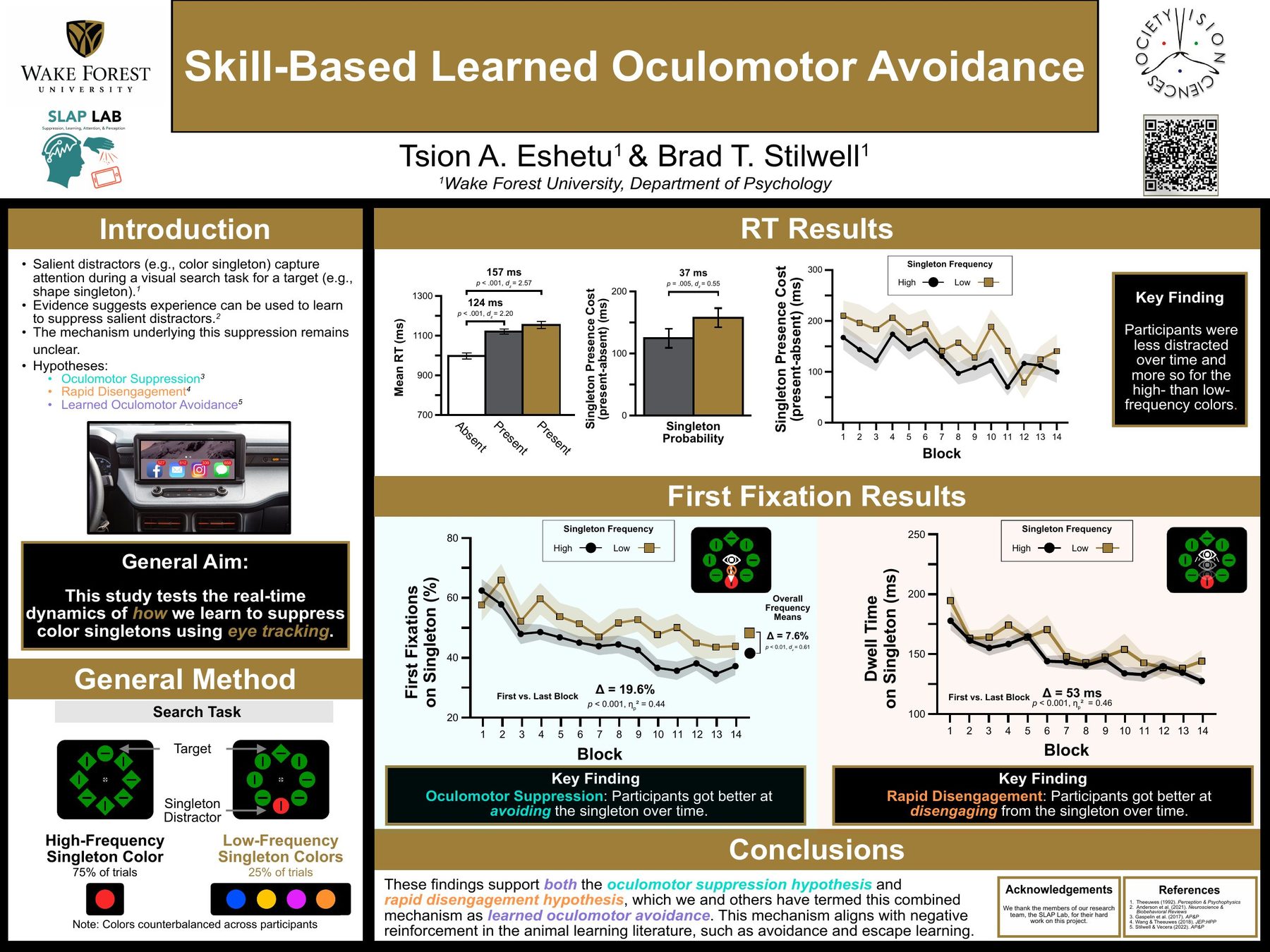
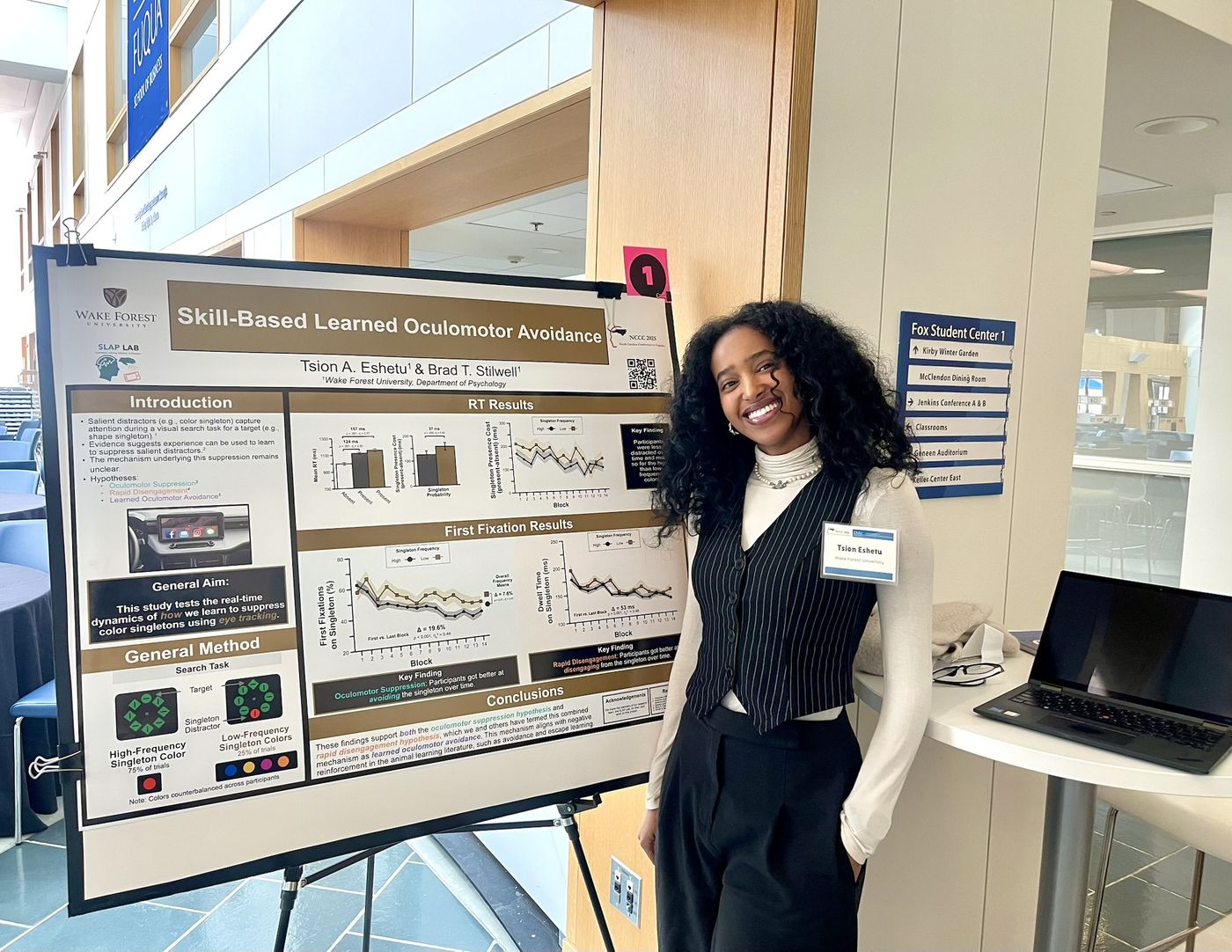
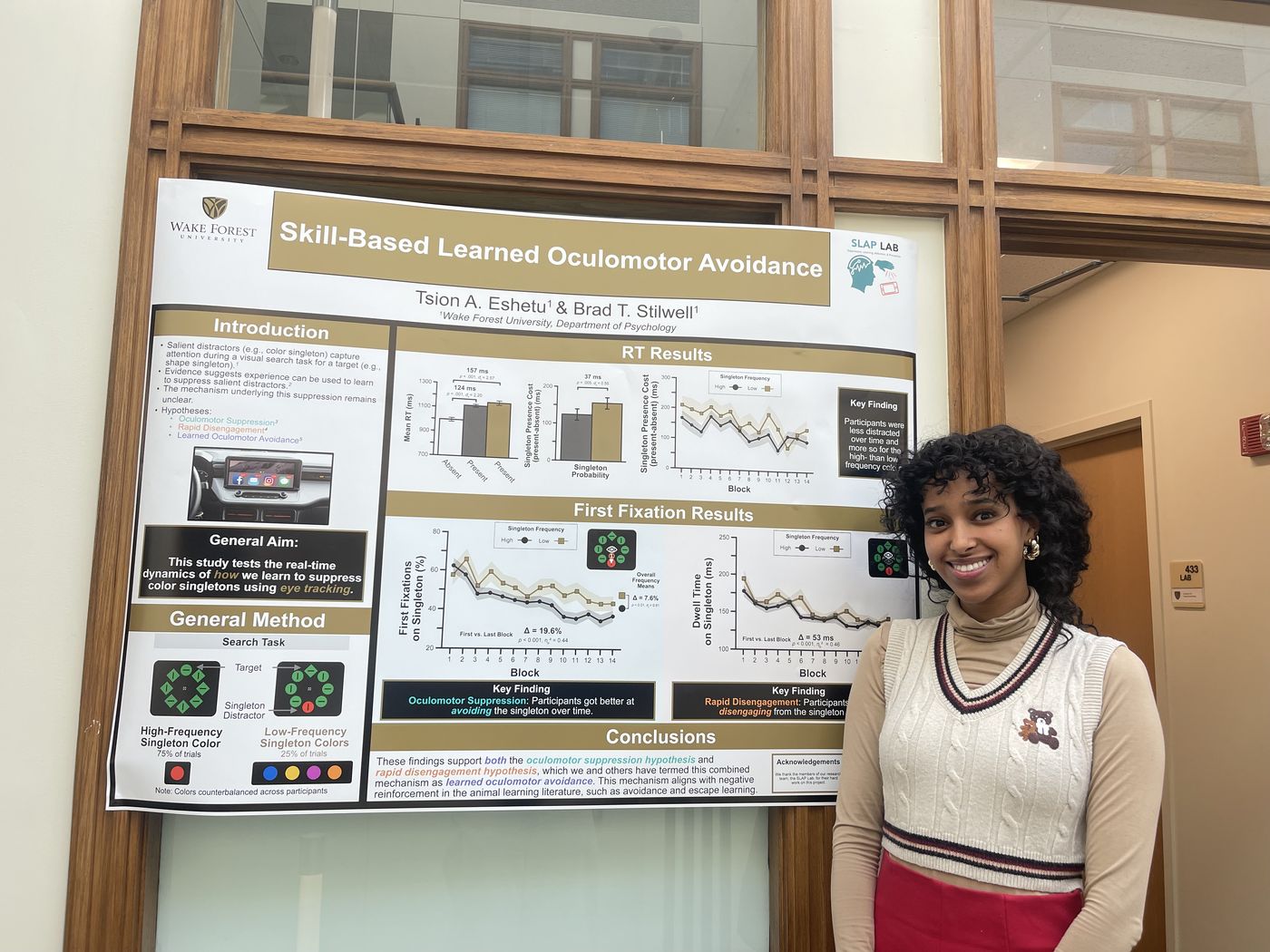
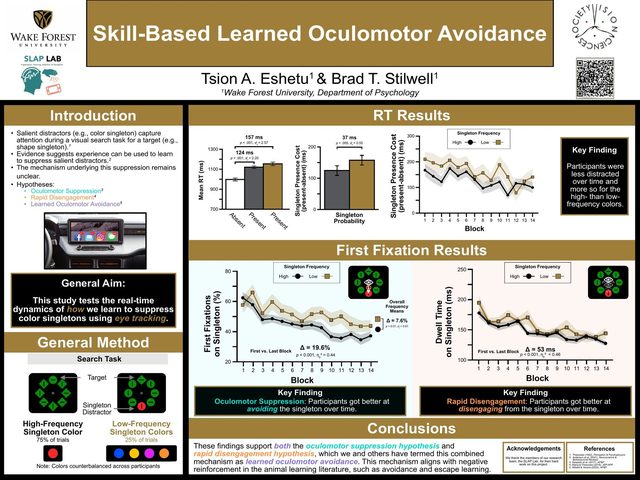
Research poster titled Skill-Based Learned Oculomotor Avoidance, by Tsion A. Eshetu and Brad T. Stilwell. It has sections for the introduction, general method, reaction-time results, first-fixation results, and conclusions. A full text description follows the image.
Poster presented at the Vision Sciences Society Annual Meeting, May 2026. Open the poster as a PDF.
Text description of the poster

Introduction

Salient distractors, such as a color singleton, capture attention during visual search for a target, such as a shape singleton. Experience can be used to learn to suppress salient distractors, but the mechanism is unclear. Three hypotheses are tested: oculomotor suppression, rapid disengagement, and learned oculomotor avoidance. The general aim is to test the real-time dynamics of how we learn to suppress color singletons, using eye tracking.

General method

In the search task, the target is a uniquely shaped item among green items, and a color singleton distractor appears on some trials. One high-frequency singleton color appeared on 75% of trials, and four low-frequency singleton colors shared the other 25%. Colors were counterbalanced across participants.

Reaction time results

Mean reaction time was fastest when the singleton was absent. Compared with singleton-absent trials, the singleton slowed responses by 124 ms for the high-frequency color and by 157 ms for the low-frequency colors. The 37 ms difference between the two was reliable (p = .005). The singleton cost shrank across the 14 blocks of the experiment and was smaller for the high-frequency color. Key finding: participants were less distracted over time, and more so for high-frequency than low-frequency colors.

First fixation results

The percentage of first fixations landing on the singleton fell across blocks, with a decrease of 19.6% from the first block to the last (p < .001), and it was lower overall for the high-frequency color (a 7.6% difference, p < .01). Key finding, oculomotor suppression: participants got better at avoiding the singleton over time. Dwell time on the singleton also fell across blocks, by 53 ms from the first block to the last (p < .001). Key finding, rapid disengagement: participants got better at disengaging from the singleton over time.

Conclusions

The findings support both the oculomotor suppression hypothesis and the rapid disengagement hypothesis. Together, this combined mechanism is termed learned oculomotor avoidance. It aligns with negative reinforcement in the animal learning literature, such as avoidance learning and escape learning.
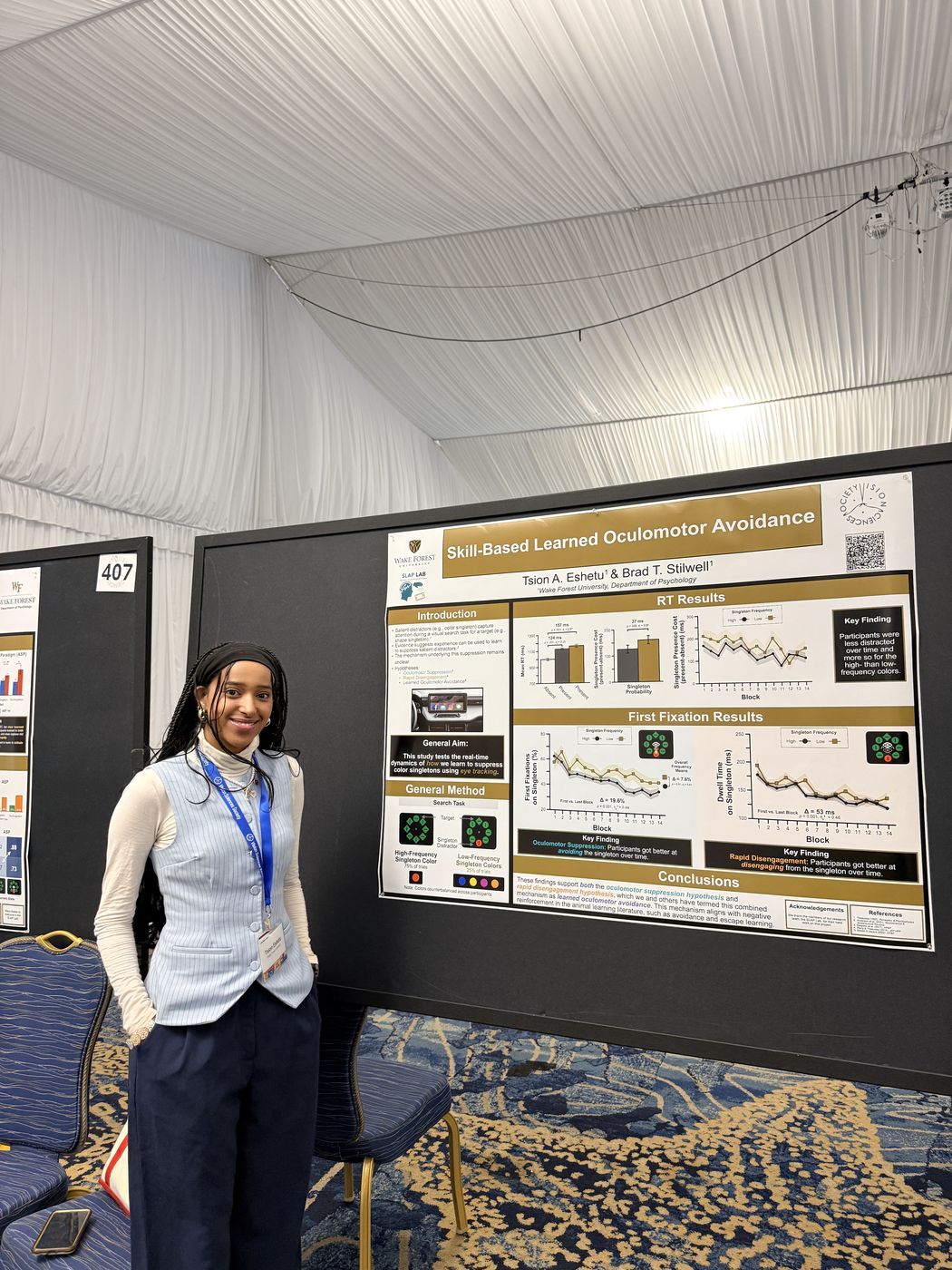
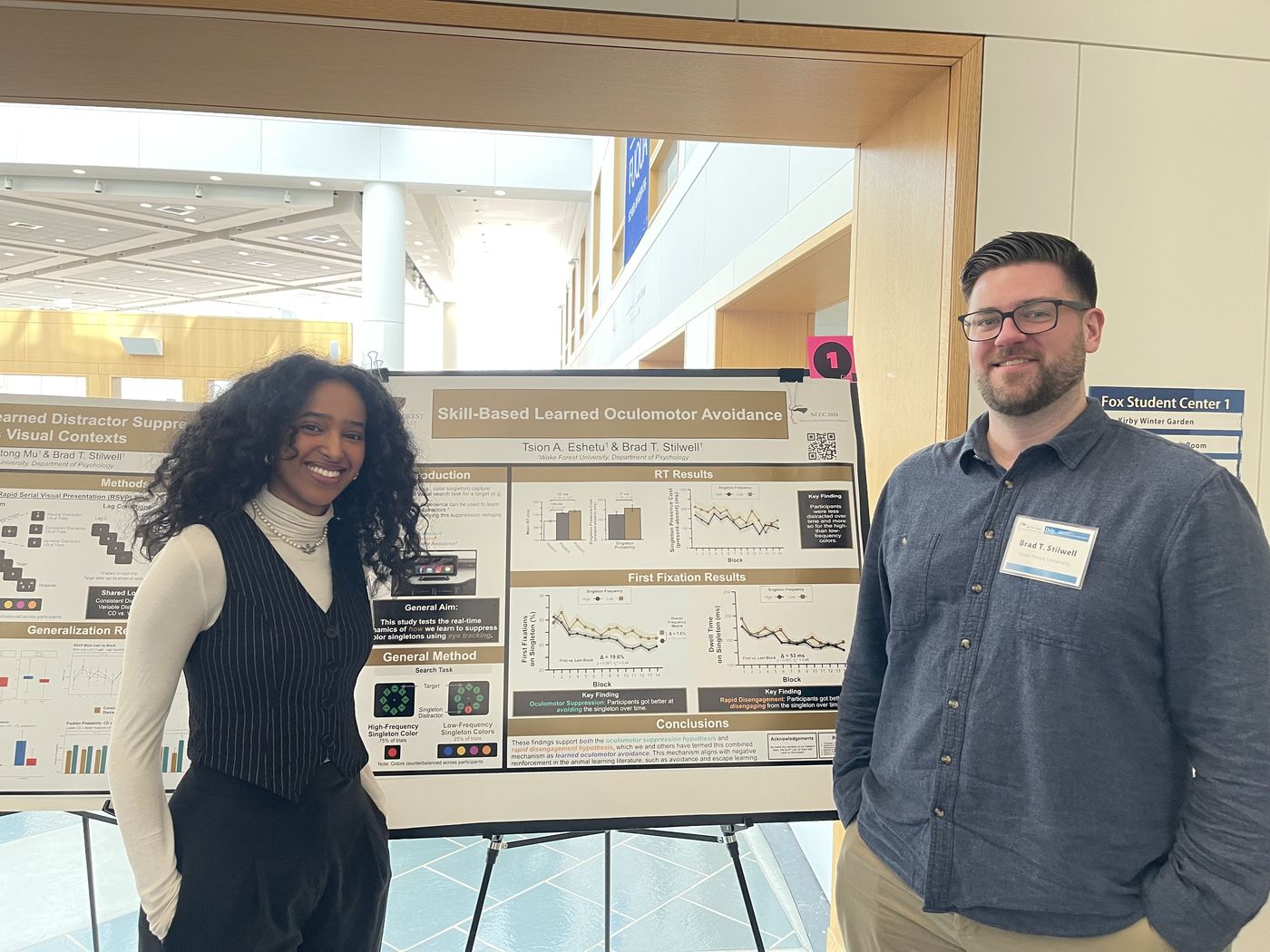
Master's thesis with Brad T. Stilwell. In progress.

Why do some people learn to ignore distractions better than others?

My first-year project shows how people get better at ignoring distractors, on average. My thesis asks whether individual differences, such as attention control or distractibility, predict who learns this skill best.

Read the full summary

In progress. Design and measures are still being finalized.

My first-year project shows how people get better at ignoring distractors with experience, on average. It does not explain why some people improve more than others. My thesis asks whether individual differences predict how well people learn this skill, using the same eye-tracking search task.

I am considering predictors such as working memory and attention control, trait anxiety, mind wandering, and action video game experience. Different traits may relate to different parts of the skill: how often the eyes are drawn to the distractor first, or how long they stay once they get there.

Experience

Research

  • August 2025 to present

    Graduate Student Researcher

    SLAP Lab, Wake Forest University. Advisor: Dr. Brad T. Stilwell

  • September 2022 to June 2025

    Clinical Research Coordinator

    Center for Retina and Brain, University of Rochester Medical Center. Supervisors: Dr. Steven M. Silverstein, Dr. Joy J. Choi, and Dr. Judy Thompson

  • February 2021 to May 2022

    Undergraduate Research Assistant

    Developmental and Behavioral Pediatrics, University of Rochester Medical Center. Supervisor: Dr. Lynne E. Levato

  • February 2021 to May 2022

    Lab Coordinator

    Lab for Behavioral Health Skills, University of Rochester. Supervisor: Dr. Wendi Cross

Teaching

  • Wake Forest University

    Lab Instructor

    Research Methods in Psychology (PSY 211)

  • Fall 2025

    Teaching Assistant

    Methods in Psychological Research (PSY 210) and Introductory Psychology (PSY 151), Wake Forest University

  • Fall 2021

    Teaching Assistant

    Neuropsychology (PSYC/BCSC 242), University of Rochester

Awards and honors

  • Professional Development Award, Object Perception, Attention, and Memory Conference (spotlight)2026
  • Second Place, Graduate Student Division, Sigma Xi Student Research Showcase (presentation)2026
  • ComSciCon-Triangle Workshop, selected participant (1 of 50 selected statewide)2026
  • Psi Chi Honor Society2021 to present
  • University of Rochester Dean's Scholarship ($36,000)2018 to 2022
  • University of Rochester Dean's List2018 to 2022
  • University of Rochester Kearn's Scholar2019
  • University of Rochester Research and Innovation Grant ($4,500)2018

Methods and tools

Eye tracking and physiology

  • EyeLink 1000 Plus eye tracking
  • EEG
  • Electroretinography (ERG)
  • OCT / OCT-angiography
  • Fundus photography

Programming and statistics

  • MATLAB
  • R
  • SPSS
  • SYSTAT

Clinical and cognitive assessment

  • MINI
  • SCID-5
  • MoCA
  • MATRICS (MCCB)

Presentations

Upcoming conference presentations

  • November 2026 Eshetu, T. A., & Stilwell, B. T. Skill-based learned oculomotor avoidance. Oral presentation at the Object Perception, Attention, and Memory (OPAM) conference, San Diego, CA.
  • November 2026 Eshetu, T. A., & Stilwell, B. T. Skill-based learned oculomotor avoidance. Poster at the Psychonomic Society Annual Meeting, San Diego, CA.
  • November 2026 Stilwell, B. T., Eshetu, T. A., & Mu, B. B. The skill of learning to suppress distractors: Learned oculomotor avoidance. Poster at the Psychonomic Society Annual Meeting, San Diego, CA.

Past conference presentations

  • May 2026 Eshetu, T. A., & Stilwell, B. T. Skill-based learned oculomotor avoidance. Poster at the Vision Sciences Society (VSS) Annual Meeting, St. Pete Beach, FL. Poster (PDF)
  • March 2026 Eshetu, T. A., & Stilwell, B. T. Skill-based learned oculomotor avoidance. Poster at the North Carolina Conference on Cognition, Durham, NC.
  • September 2025 Dennis, H., Eshetu, T. A., Dougherty, M., Elacqua, M., Silverstein, S. M., Lalor, E., & Thompson, J. Sensed presence experiences in individuals with and without schizophrenia: Clinical and perceptual correlates. Poster at the Society for Research in Psychopathology (SRP) Annual Conference, Los Angeles, CA.
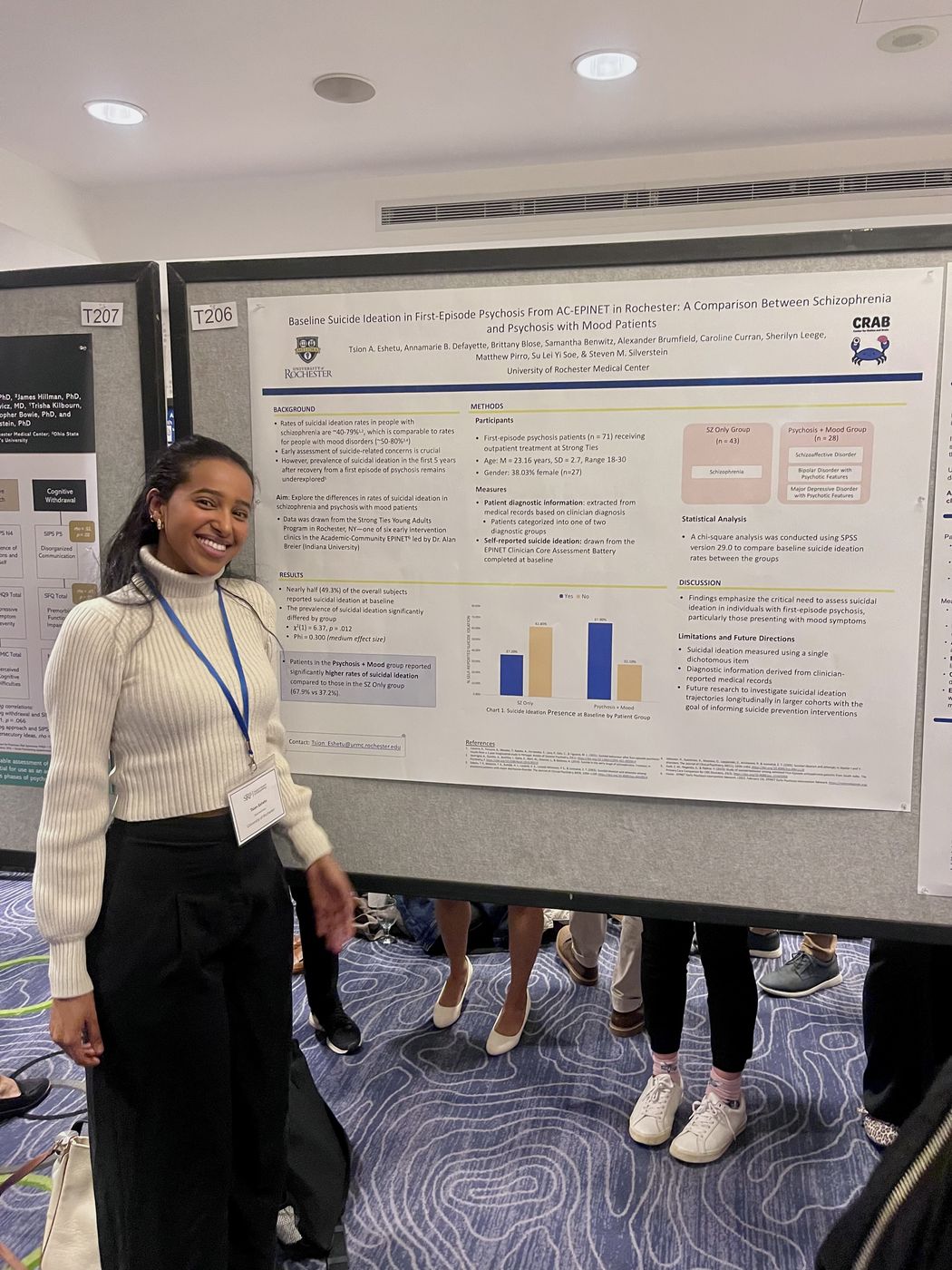
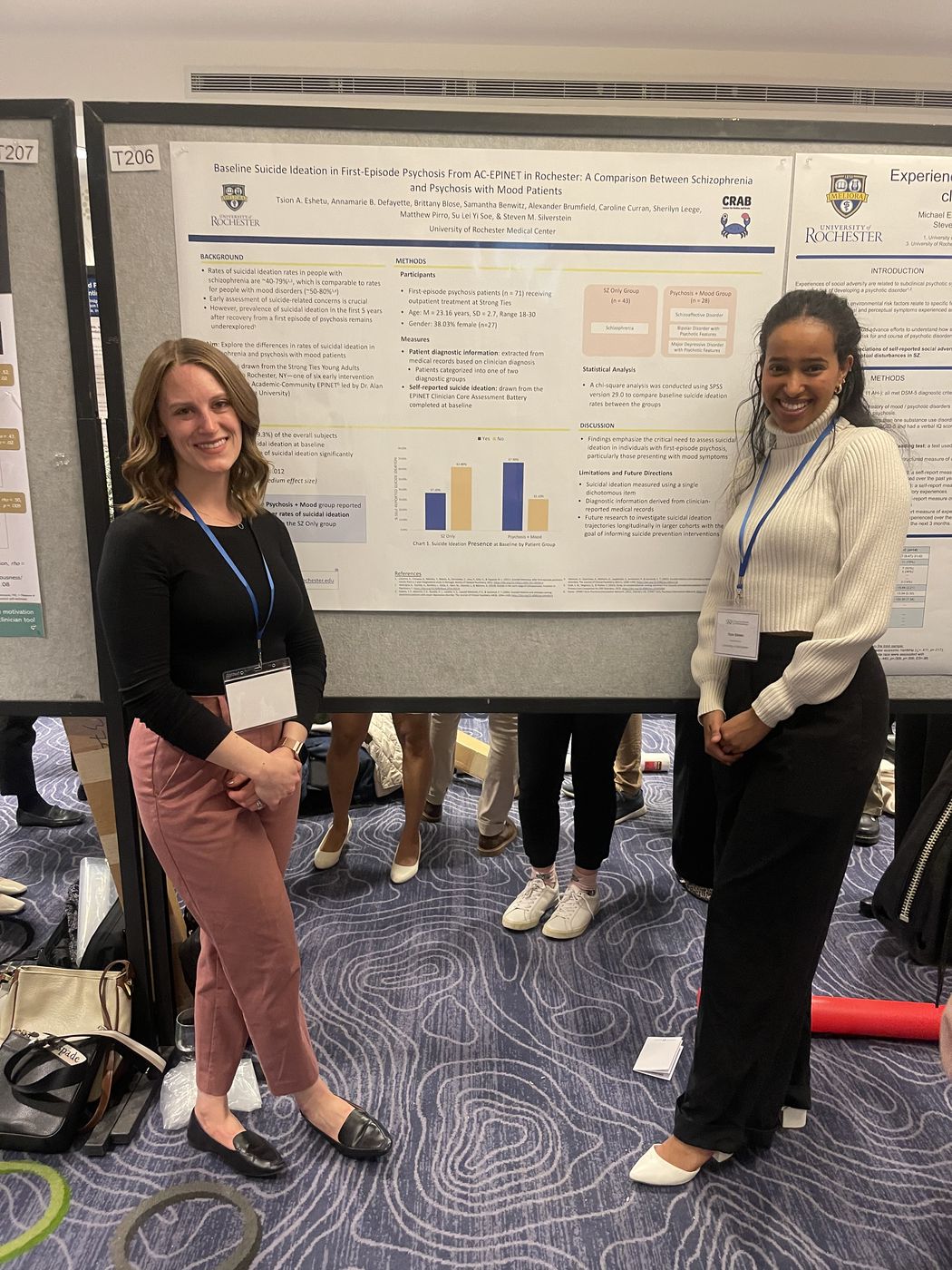
  • October 2024 Eshetu, T. A., Defayette, A. B., Blose, B., Benwitz, S., Brumfield, A., Curran, C., Leege, S., Pirro, M., Soe, S. L. Y., & Silverstein, S. M. Baseline suicide ideation in first-episode psychosis from AC-EPINET in Rochester: A comparison between schizophrenia and psychosis with mood patients. Poster at the SRP Annual Conference, Montreal, Canada.
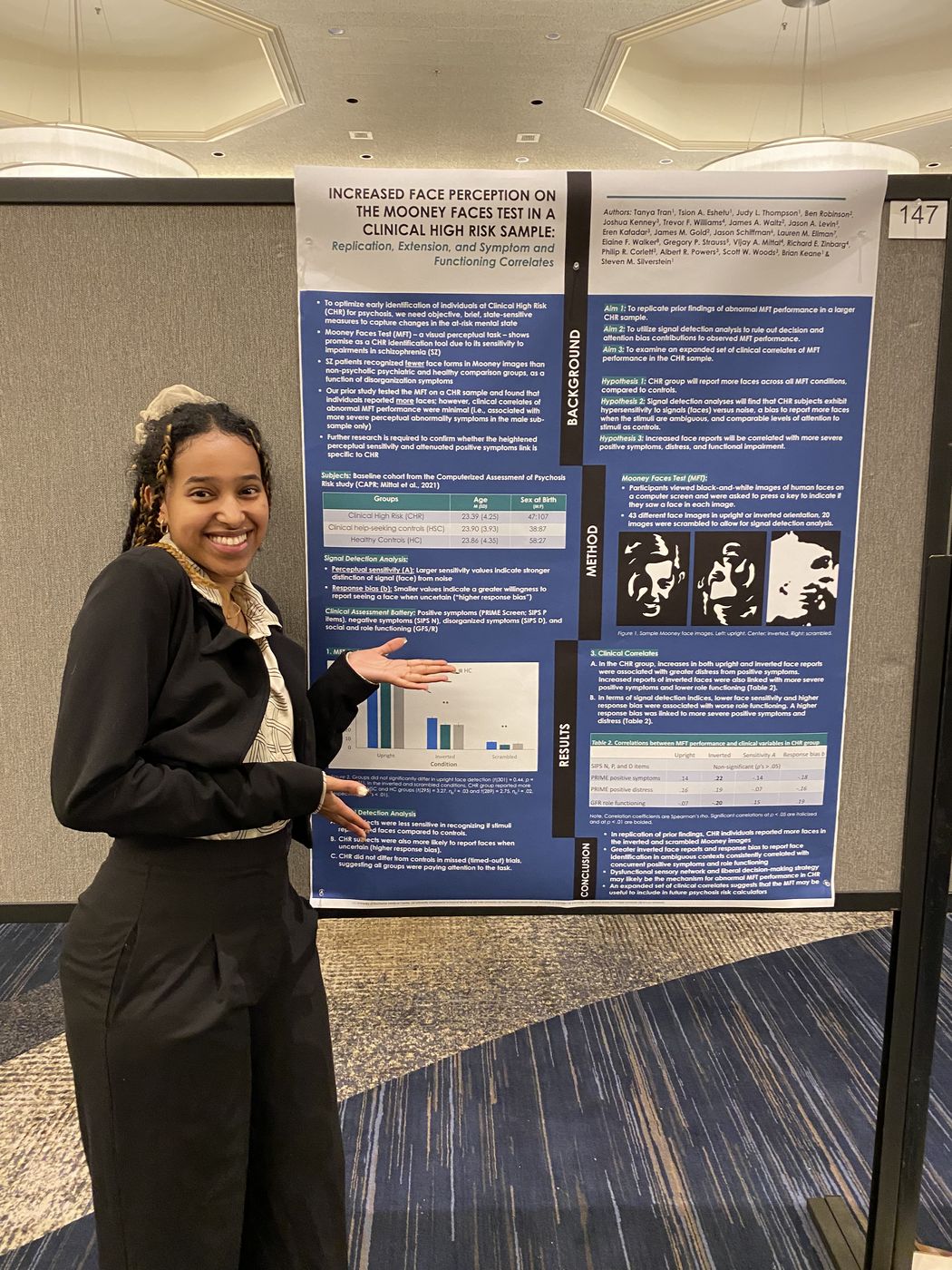
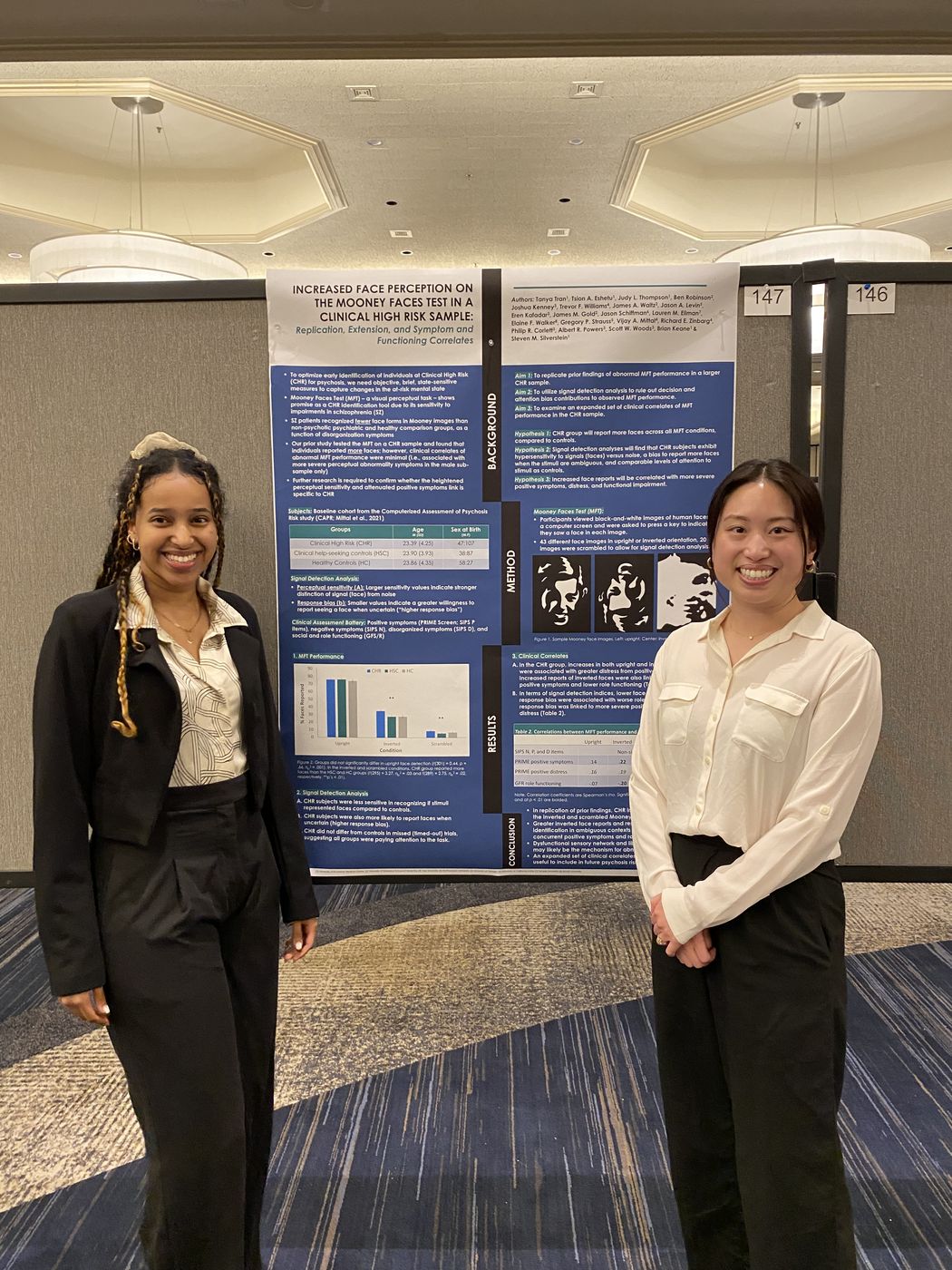
  • September 2023 Tran, T., Eshetu, T. A., Thompson, J. L., Robinson, B., Kenney, J., Williams, T. F., Waltz, J. A., Levin, J. A., Kafadar, E., Gold, J. M., Schiffman, J., Ellman, L. M., Walker, E. F., Strauss, G. P., Mittal, V. A., Zinbarg, R. E., Corlett, P. R., Powers, A. R., Woods, S. W., & Silverstein, S. M. Increased face perception on the Mooney Faces Test in a clinical high-risk sample: Replication, extension, and symptom and functioning correlates. Poster at the SRP Annual Conference, St. Louis, MO.

Manuscripts

  • In preparation Eshetu, T. A., & Stilwell, B. T. Skill-based learned oculomotor avoidance.

Contact

eshet25@wfu.edu

Winston-Salem, North Carolina